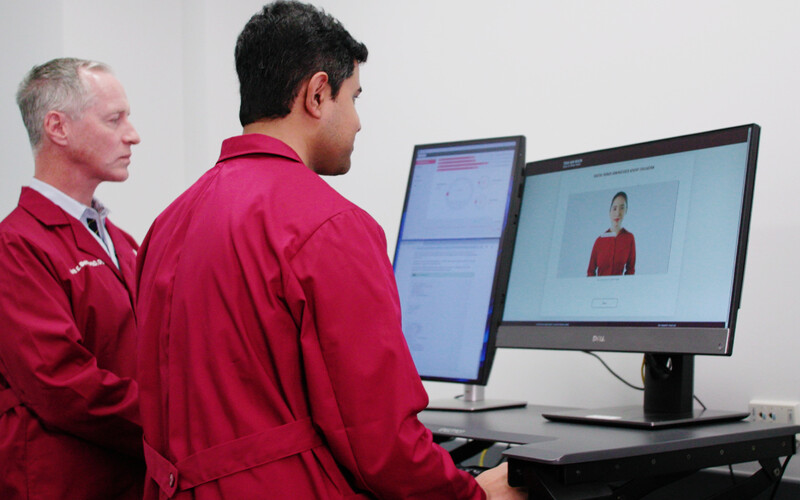
Texas A&M University Health Aims to Improve Early Detection
At Texas A&M University Health, researchers with the Dementia and Alzheimer’s Research Initiative are developing an AI-powered “digital human” system designed to identify early dementia indicators, including apathy, before measurable cognitive decline becomes apparent.
The project combines facial expression analysis, biometric signals and response timing to create what researchers describe as a more standardized and objective screening process compared with traditional self-reported evaluations.
Current screening methods can vary significantly depending on who conducts the evaluation, says Mark Benden, department head of environmental and occupational health at Texas A&M University’s School of Public Health.
“Using the same ‘digital human’ to conduct all of the evaluations across all patients and all times would be a major improvement,” Benden says, adding that incorporating biometric data will be a game changer.
Earlier detection of apathy and other behavioral changes could help clinicians intervene sooner with physical, social and behavioral therapies that may slow disease progression.
Although hardware and software consistency remain technical challenges, Benden notes, screening tools will become smaller and more accessible over time, potentially allowing passive monitoring through everyday activities.
“Hopefully, by the time the technology and processing catch up, we will have enough data to really make a big difference,” he says.
The University of New Hampshire Tests At-Home Care Robots
University of New Hampshire researchers are testing socially assistive robots in real homes as part of an effort to support dementia patients and address long-term caregiver shortages.
The project combines AI software, distributed smart home sensors and mobile robotics to help older adults with reminders, monitoring and support with daily tasks, allowing them to remain in their homes longer. Moving these systems from controlled lab settings into unpredictable real-life environments introduces major technical and ethical challenges.
“Unstructured home environments remain the greatest challenge for autonomous robots,” says Momotaz Begum, assistant professor of computer science at the University of New Hampshire.
Aging-care robots must interpret their surroundings with “the highest precision,” Begum says, because a single failure in the perception or decision-making pipeline could create safety risks for vulnerable patients.
The system uses personalized AI models tailored to individual homes and patient needs. “Without meaningful personalization, individual care goals simply cannot be met,” she adds.
7.4 million
The estimated number of Americans age 65 and older living with clinical Alzheimer’s dementia
Source: Alzheimer’s Association, 2026 Alzheimer’s Disease Facts and Figures, April 2026
Quality Dementia Care Requires a Human Touch
Maintaining a balance between safety, privacy and human autonomy remains critical as these systems become more autonomous, says Sajay Arthanat, professor of occupational therapy at the University of New Hampshire.
“The robot realistically cannot and must not replace the human caregiver,” Arthanat says.
However, socially assistive robots could eventually play a larger role in helping older adults age in place, though widespread deployment will depend on broader industry investment and continued advancements in AI and robotics.
“Tailoring it to the unique care demands within a home as well as to human sensibilities is key,” Arthanat says.
UP NEXT: How can senior living communities use data to improve care and operations?