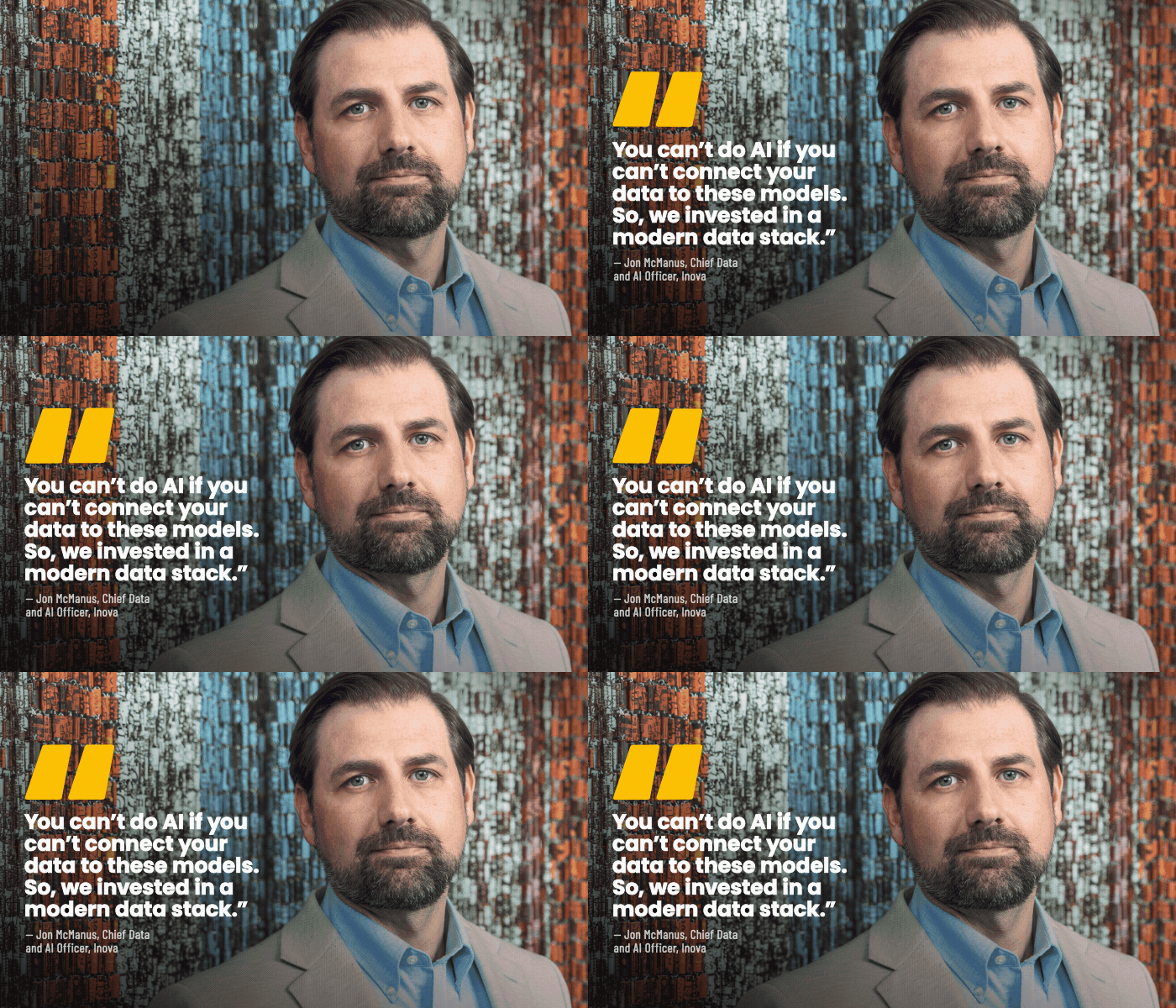






HEALTHTECH: How does Inova determine which AI use cases will deliver the most value for the organization? How are you choosing solutions?
MCMANUS: We’ve stood up an AI ethics and oversight committee that has a robust structure. We have a mature AI product management function; a team of five AI product managers who help us with idea management, the front door to governance, business proposals — essentially, separating the noise of the AI market and vendor space from the real concerns we need to make decisions on. Through that process, we look at the risk and liability of a particular feature, any policy changes that may need to happen, adequate training and visibility, cost, and value-creation components. Are we taking it, shaping it or making it? Those are three very different disciplines across the AI portfolio. What is the expected return? Are those soft or hard savings? And there are many things that we do in healthcare that affect quality that don't really generate a financial return, and that’s OK. It’s important to treat the whole scope as a balanced portfolio.
We look at those components and then make a simple decision: Is this OK or not to do? We need to determine whether it is ethical, safe, reliable, and all the mechanics with it.
Today at Inova, we have 67 different AI features in production. Of those features, we’re tracking value, safety and reliability and doing continuous monitoring.
HEALTHTECH: Tell us more about key stakeholder involvement and the multidisciplinary nature of adopting an AI solution. How do you align users’ interests with organizational aims?
MCMANUS: Even as Inova’s chief data and AI officer, I don’t believe in centralizing the implementation of AI. What we’ve centralized is answering a simple question from an interdisciplinary perspective: Is this OK or not to do on behalf of Inova? But we encourage our organization to really explore opportunities around AI and many other technologies.
Our AI ethics and oversight committee is chaired by one of our physicians. We have a subcommittee structure where we focus on certain cohorts of the business. That provides the space to have dedicated conversations about what our physicians and advanced practice providers care about relating to AI. What are their training needs? What are their concerns? What technology areas do they really want to focus on? That can be very different from the business support services cohort. It is a priority for Inova to see and hear the different needs our team members and caregivers have regarding AI.
I think what a lot of people miss out on is a focus for AI training with leaders, because that’s where you need to teach how you can orchestrate with AI. How do you identify and evaluate a problem that AI is appropriate to solve? Can that be done responsibly and safely? There are different learning objectives associated with that.
Our AI ethics and oversight committee has 24 members, and they’re from all different swaths of the organization. We’ve got seven different physicians on there, covering different scopes of practice; we have key administrators, leaders from nursing, supply chain, legal, privacy. We also have a component for bioethics, as well as the voice of our community and our patients. We bring all of those things together. I know that can sound complicated, but we’ve streamlined it so it’s an easy-to-understand process.