


Close

New Research from CDW Explores AI and Cybersecurity

Learn how AI is helping IT teams manage risk and improve resilience.

Aug 10 2026
Management

How 3 Leading Senior Care Organizations Approach Innovation

Industry leaders push for change as residents and staff members expect advanced solutions for better care and operations.

Late at night, when residents at Asbury Communities have a pressing question about tomorrow’s activities or dining options, they don’t have to wait for morning to ask. Now, they can pick up their room phone and ask Joy, a concierge powered by artificial intelligence.

It’s similar to Alexa or Siri, but Joy is delivered through an aging tech provider’s AI bot that pulls information from Asbury’s resident engagement platform. It doesn’t replace human concierges, but it extends service to off-hours, says COO Todd Andrews.

Joy is one of many innovative solutions the senior care organization has adopted across its retirement communities. The Frederick, Md.-based provider has partnered with the AgeTech Collaborative from AARP to run an innovation lab for residents to try new tech.

“Technology and innovation are a huge part of our strategic blueprint,” Andrews says. “We’re not afraid to try new things.”

Click the banner to learn how tech eases operational challenges and improves resident experiences.


Senior care organizations are embracing technology with more enthusiasm as the baby boomers now entering their communities expect better connectivity and technology access, making those features a competitive necessity, says Sheri Rose, executive director of Thrive Center, a Louisville, Ky.-based nonprofit that vets and showcases emerging aging tech solutions.

Another aspect is the ongoing workforce shortage in the sector.

“A lot of these technologies augment the senior living workforce staff,” Rose says. “Independent and assisted living residents desire to maintain their independence for as long as possible, delaying the transition to skilled nursing. Technology helps to monitor the health of residents.”

So, to improve resident care and experiences and boost operational efficiency, senior care organizations are becoming more bullish about innovation, piloting and adopting solutions that span smart home and engagement devices to help residents stay independent and connected, mobility and brain health solutions for physical and cognitive wellness, and safety monitoring tools that detect falls and changes in residents’ conditions. Providers are also adopting AI solutions that help streamline workflows and offer clearer, data-driven insights on resident health, staffing needs and other operational decisions.

EXPLORE: How can AI support the senior care workforce?

Asbury Communities Residents Can Try New Tech Hands-On

To support innovative tools, Asbury has built out a modern IT infrastructure that includes Cisco Meraki networking and Wi-Fi equipment across its nine communities.

The organization’s subsidiary, ThriveWell Tech, which grew from its IT division, migrated Asbury off its on-premises data center about five years ago, moving applications and data to Amazon Web Services, Microsoft Azure and Software as a Service offerings, Andrews says.

Clinical, operational and financial data lives in an AWS data lake for analytics use to support informed decisions across the provider’s independent and assisted living, mobility care, skilled nursing and rehabilitation services.

“Everything we do has data associated with it," Andrews says. “We don’t have to guess and make mistakes along the way.” 

For example, Asbury survey data revealed that adult children focus on safety, while their parents (the prospective residents) prioritize hobbies, interests and a sense of purpose. That shapes how Asbury markets itself and the experiences and technologies it rolls out across its communities, says Senior Vice President of Sales and Brand Michelle Curnow.

“We can use the data to build, create or enhance activities and programming,” she says.
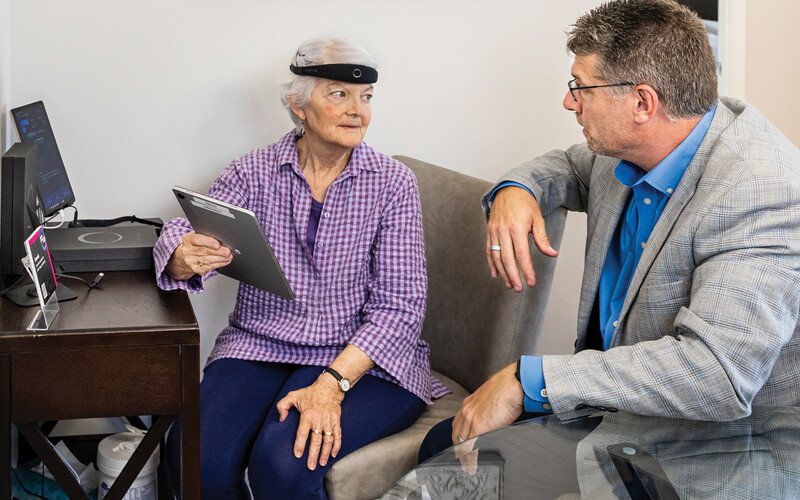
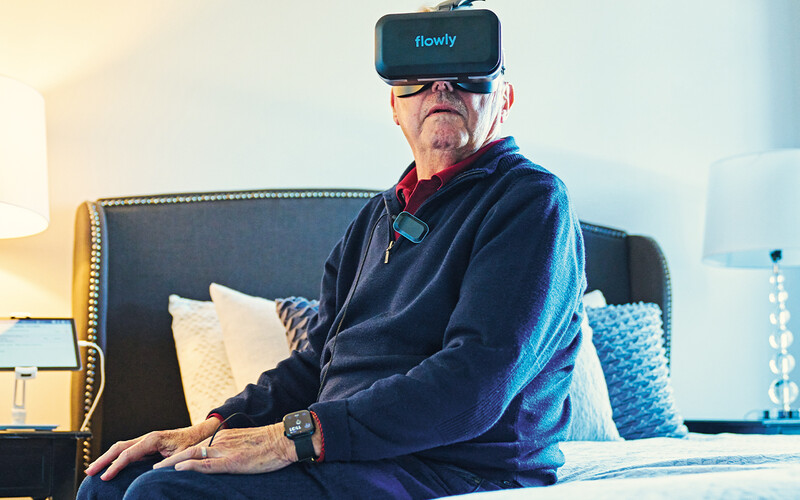
At Asbury Methodist Village in Gaithersburg, Md., residents can visit an innovation lab to try pre-market solutions and provide feedback to vendors, helping Asbury decide what to adopt, Curnow says. The lab tests about five technologies at a time for 60 to 90 days in a model apartment that residents can visit and then share feedback via paper or an Apple iPad.

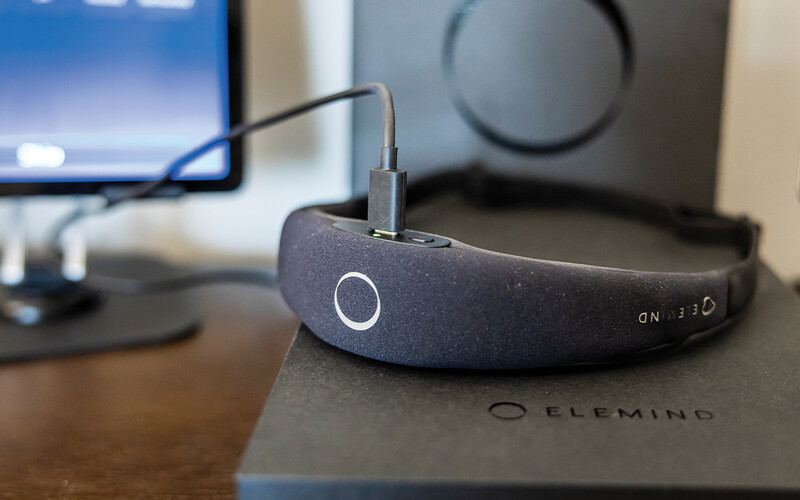
So far, they’ve tried a speech-optimizing sound bar, a neurotech headband to help people sleep, and a wearable ring that can help switch lights, TVs and ceiling fans on or off.

When the community adopts new tech, Asbury continues to improve it even after rollout. For example, Joy first launched as a TV-based AI concierge, but Asbury added it as a phone-based service because residents preferred it, Curnow says.

The organization is also piloting a solution that pairs cameras with a predictive algorithm (reliant on Asbury’s network and Wi-Fi access points) to help prevent falls and alert staff immediately if one occurs. To preserve resident privacy, cameras generate visual representations. When the system detects trouble, such as residents sliding out of bed or struggling to get up, nurses receive an alert on their iPhone devices, Andrews says.

“We can have somebody at a room in 30 seconds, hopefully before the resident has a fall,” he adds.

The fall technology has been piloted in two communities, where 98% of assisted living and skilled nursing residents have opted in. The organization plans to roll it out to two more communities by September 2026, Andrews says. There are also plans for a smart home program with in-room thermostat control and optional upgrades, such as motorized window shades.

“If we only did what our residents wanted, we would not evolve,” he says. “People like what they like. But we have to be willing to try the new things that are going to make life better.”

READ MORE: How can senior living communities use data to improve care and operations?

United Methodist Communities Shares Its Layered Tech Strategy

United Methodist Communities has an innovation strategy built on three layers: a strong infrastructure, tools that remove friction for staff, and a disciplined governance process for evaluating and piloting new technology.

Travis Gleinig, vice president of innovation and CIO, notes that the first layer is critical: A modern, reliable infrastructure is the foundation for adopting innovative solutions. The Neptune, N.J.-based organization, which operates four full-service communities, five affordable senior housing properties and HomeWorks home healthcare services, uses two dedicated gigabit circuits per community for high-speed connectivity.

UMC standardizes on Ruckus Wi-Fi access points, with each resident assigned their own access code and dedicated virtual LAN to reduce congestion and interference. It replaced a less reliable guest network.

“Residents can stream and not print to their neighbor’s printer. They can stay connected with family and friends and go about their day without technology getting in the way,” Gleinig says. “It’s a better overall experience for them and gives us better control.”

By the end of 2026, UMC will fully decommission its on-premises data center, running all applications in the cloud. The organization uses Microsoft 365 for productivity, Microsoft Fabric and Power BI for analytics, and Intune for device management.

76%

The percentage of senior living executives who say AI will have a transformative or positive effect on the senior living industry over the next five years

Source: Argentum, “The State of Technology Adoption in Senior Living,” July 2025

That foundation enables the IT department to improve staff workflows, from automated account and device provisioning to AI-driven screening of caregiver applicants, Gleinig says.

“If our caregivers can spend 20%, 30%, 40% more time with a resident or client doing care, focused on delivering care rather than navigating login issues or system challenges, it creates a much better experience for those we serve,” he says. “Our teams chose this field to care for people, not for wrangling technology.”

Nurses and caregivers carry Apple iPad devices for point-of-care documentation, and medication carts now run on Google Chromebooks, which deliver two days of battery life compared with half a shift on previous laptops. UMC’s Center of Excellence, made up of third-party developers and data analysts, has automated onboarding and offboarding processes, provisioning application access when new caregivers are hired and revoking access when they leave.

An AI voice agent serves as a concierge at UMC’s full-service communities and reduces calls to the reception desk. The platform also gathers feedback from residents and families through natural conversations and routes issues to the appropriate departments.

“Everything we’re doing in the area of innovation is to equip our team members with the tools they need to perform at their best,” he says. “And it helps us deliver high-quality care every day.”

UMC also trials new solutions with residents, families and staff to decide what to adopt, Gleinig says. A current pilot involves under-mattress bed sensors that monitor sleep patterns and vital signs to track residents’ well-being and help flag fall risks. 

“We evaluate technology really carefully,” says Gleinig, who is also on Thrive Center’s board. “We have a strong process for technology governance.”

DISCOVER: Here are tips for senior care organizations on navigating innovation and AI.

Brookdale Senior Living Relies on Resident and Staff Feedback

As Americans age, they should have a say in the development of the emerging solutions that are meant to support their care, industry leaders have expressed.

At Brookdale Senior Living, a pilot that receives positive feedback from residents and associates helps the organization to develop a plan to scale the technology to additional communities where it best fits, says Sara Terry, vice president of resident and family engagement.

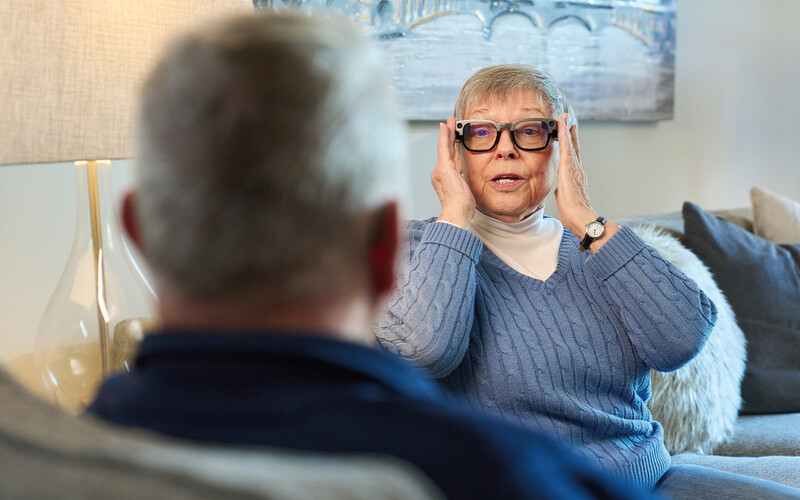
The Brentwood, Tenn.-based operator of more than 500 senior living communities has deployed a wireless headphone system that enhances the ability to hear and focus and allows residents to better communicate and engage in one-on-one interactions and group programming.

It also uses an AI-powered platform that associates use to interview residents about their interests, preferences and life experiences. The tool organizes their responses into resident profiles that help Brookdale design relevant, meaningful and personalized engagement opportunities, such as connecting fellow residents on common interests, Terry says.

Brookdale has deployed networking and Wi-Fi infrastructure to support its technology rollouts. Its Innovation Committee, which includes resident engagement, clinical, operations and IT staff, evaluates and approves new technology to ensure it aligns with the organization’s mission.

“Technology should enhance residents’ lives, not complicate them,” she says. “It’s critical to choose tech that is intuitive, accessible and truly adds value to the resident experience.”

Photography By Rebecca Drobis