






Innovation is at the forefront for the organization. In 2024, it opened the Sanford Virtual Care Center as part of a $350 million virtual care initiative. The 60,000-square-foot facility offers virtual clinical services, caregiver education and a space dedicated to technological innovation. Today, Sanford Health clinicians and vendor partners at the center are collaborating to develop tools enabled with artificial intelligence to enhance care delivery, while medical students and veteran clinicians are learning to provide high-quality virtual care through simulations that leverage augmented and virtual reality technology.
Two-thirds of all Sanford Health patients who use virtual care live more than 30 miles away from any of the organization’s hubs, Newman notes. The organization uses a hybrid care model to make it easier for patients to access care.
Take, for instance, another longtime patient with Type 1 diabetes. For almost 20 years, Newman says, she drove more than an hour each way for each of her four annual appointments. Today, she simply walks across the street from her home to a local brick-and-mortar satellite clinic in Lidgerwood, N.D., and because she’s not comfortable using technology, the staff help her access her patient portal.
From there, Newman leads a video visit, talking with his patient about everything from her grandkids to the blood sugar data from her Wi-Fi-connected insulin pump.
“It’s the same care she’s always had,” he says. “The only difference is now it’s even better because it’s a better experience for her.”
READ MORE: What are rural healthcare IT priorities in a changing funding landscape?
A Matter of Survival for Rural Hospitals
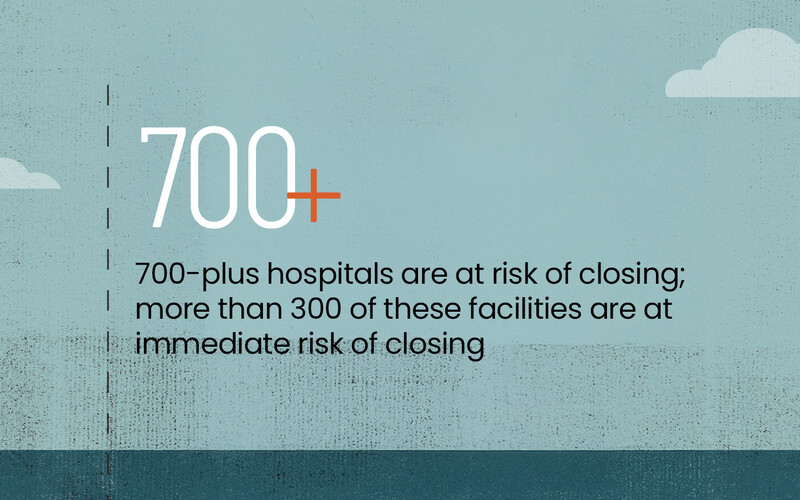
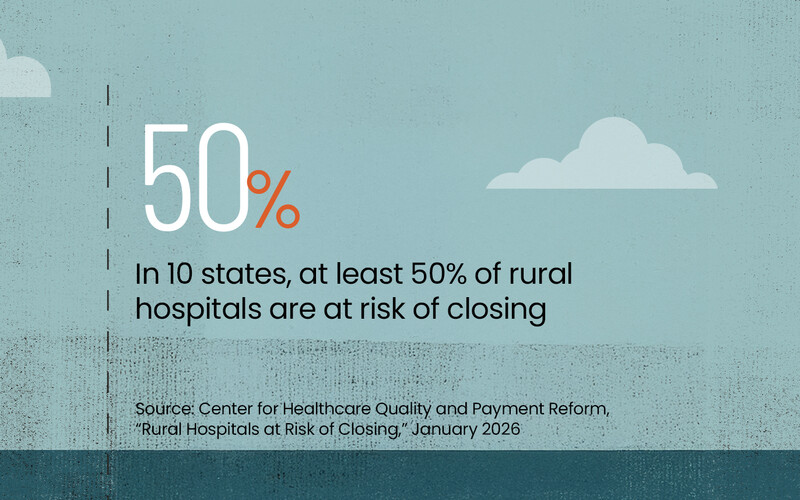
A third of rural hospitals are at risk of closing due to serious financial problems, according to the Center for Healthcare Quality and Payment Reform, mainly tied to imbalanced reimbursements. Some experts think the new $50 billion Rural Health Transformation Program (RHTP) could provide hospitals a lifeline, but with looming federal cuts to state Medicaid programs adding pressure to existing budgetary uncertainties, they acknowledge it could be an uphill battle for many.
A growing number of rural health systems are following strategies like Sanford Health’s to survive: They’re evolving by adopting new digital tools that improve patient care while driving operational efficiency.
“The big question for a lot of these hospitals is how to improve access,” says Dan Shane, associate professor at the University of Iowa’s RUPRI Center for Rural Health Policy Analysis. “And the answer for many has been to rely more on telehealth, especially when it comes to providing specialty services, and to use technologies that allow them to be more productive.”
For some, that includes solutions such as ambient clinical documentation tools and software designed to automate tasks such as coding and claims processing, Shane says. It could also mean investing in an interoperable electronic health records system or in platforms that improve cyber resilience.
“I think the view of most health IT practitioners at this point is that the health infrastructure writ large is completely dependent on having a robust technological infrastructure and backbone,” says Scott McEachern, CIO at Southern Coos Hospital and Health Center. “It’s gone from being a ‘nice-to-have’ to essential, like having a good roof on your building.”