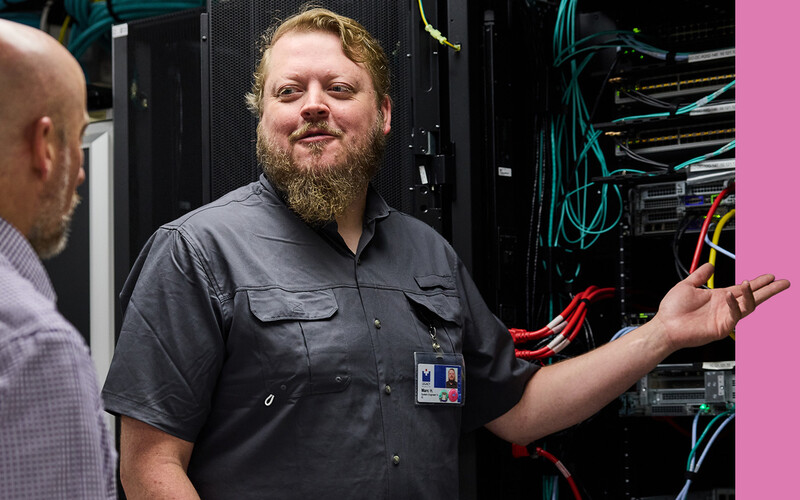






The architecture “is operationally so much simpler to manage,” says Marc Heynderickx, principal engineer at Legacy Health. And because Everpure provides capabilities such as immutable snapshots, which the health system automatically uploads to Microsoft Azure, the organization won’t lose access to patient data in the event of a disaster.
“Our goal has always been to provide a stable, resilient system for end users with minimal disruptions or downtime,” Heynderickx says. “The way it is now, that’s exactly what we have, and it means we can actually sleep at night.”
Securing Patient Data for Legacy Health and Franciscan Health
The first organization to run Epic on Everpure with Nutanix as the hypervisor, Legacy Health is among healthcare’s true pioneers when it comes to modernizing storage and data protection. It deployed adaptable infrastructure, Heynderickx says, “to keep up with technology and cybersecurity while providing a rock-solid foundation for patient care.”
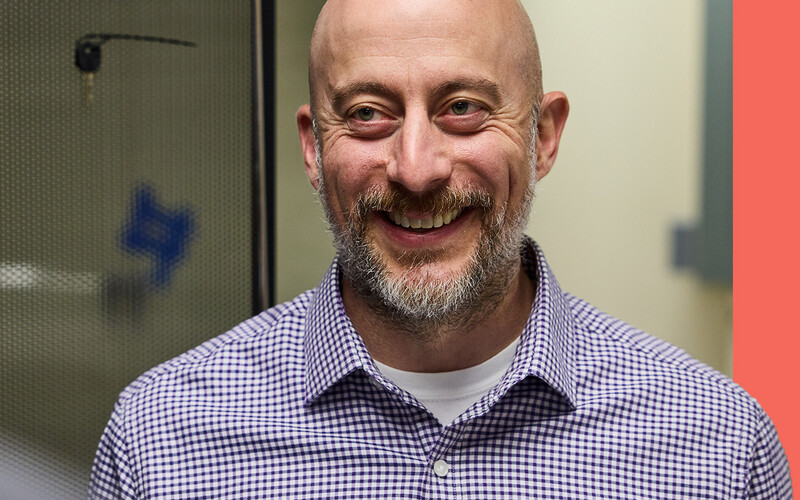
Today, Heynderickx and Stoecklin regularly talk to other IT leaders about the benefits of an architecture that treats storage and data management consistently across on-premises and cloud environments. They’ve also watched as some have followed their lead to launch similarly transformative projects of their own.
The fact that reliability and financial concerns are among the primary drivers for storage modernization comes as no surprise to Naveen Chhabra, principal analyst at Forrester Research. In a recent report, he and his colleagues noted that hardware expenses dominate on-premises storage costs. And resiliency has become a priority for most enterprises, he says, “because data itself has become so valuable.”
RELATED: This is what healthcare CIOs should prioritize as they modernize their Epic infrastructure.
Both security and resilience were top of mind for Jay Bhat when he helped facilitate the migration of Epic to Azure Virtual Machines as CISO at Franciscan Health. With 11 hospitals in Indiana and Illinois, the organization chose to move its EHR from a private cloud to improve scalability as it expands, but rising costs also played a significant role, “and protecting our data was always at the forefront of our decisions,” Bhat says.
The Azure environment allowed Bhat and his team to build in security controls at the beginning of the project rather than trying to retrofit protections into infrastructure designed a decade or more ago. It also offers failover capabilities to data centers in different regions, ensuring they can keep all systems online in case of an outage or emergency.
Today, his team has much better visibility into both Fransciscan Health’s systems and overall data movement, Bhatt says, and the ability to segment and manage workloads is vastly improved compared with the legacy setup. The team now relies on a mix of cloud services and on-premises technologies, carefully placing workloads for individual applications “based on what we need from those systems in terms of our ability to provide patient care,” he says.