




Close

New Research from CDW Explores AI and Cybersecurity

Learn how AI is helping IT teams manage risk and improve resilience.

Aug 24 2026
Patient-Centered Care

Health Systems With Centers Excel in Care Coordination

Hospitals are leveraging state-of-the-art command centers to drive operational efficiency and improve patient outcomes.

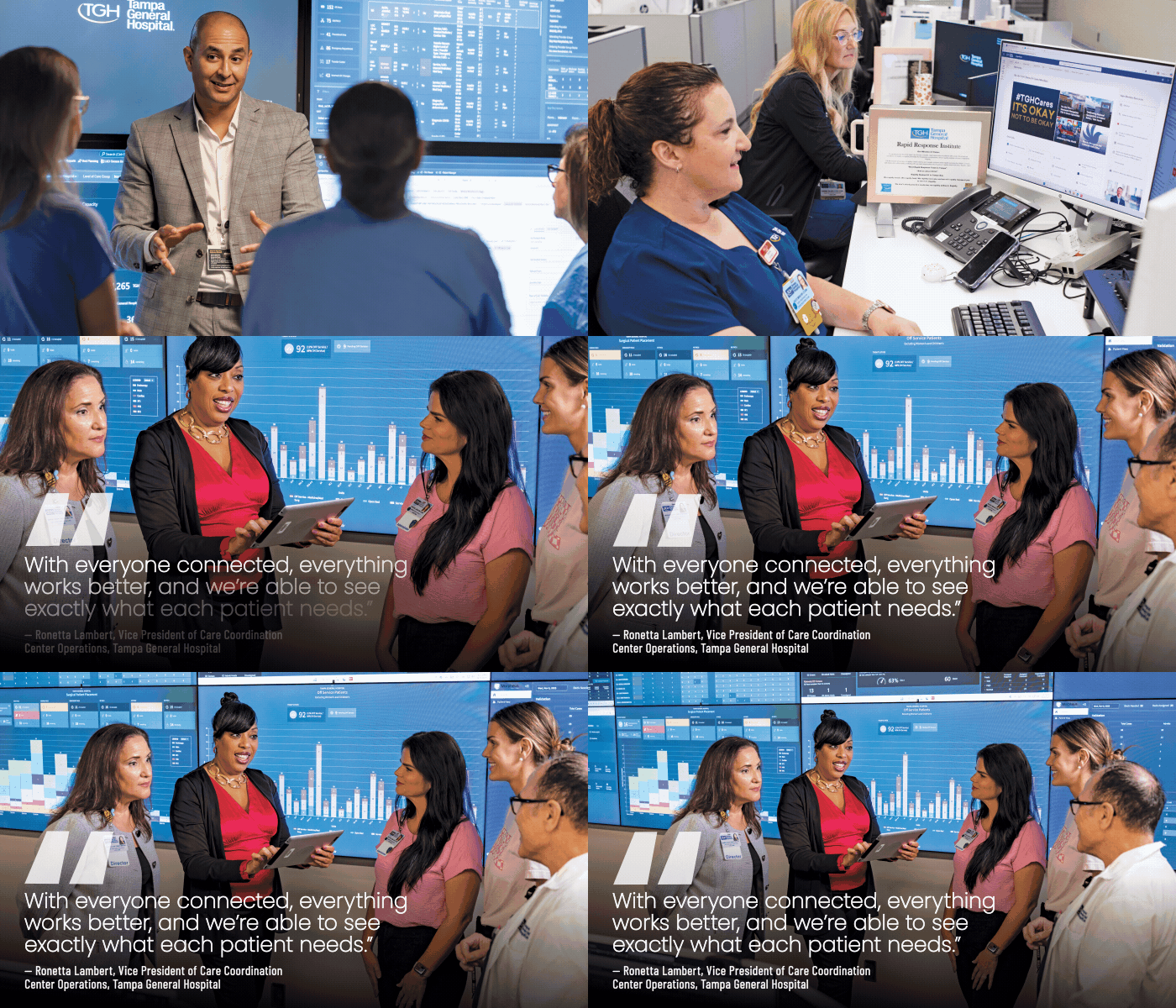
To the left, a team of transfer center nurses coordinates intake processes for patients arriving from other facilities. Nearby, clinical expeditors identify and resolve any issues that might delay important procedures or disrupt patient flow. Separately, a rapid response team monitors high-risk patients for signs of deterioration.

Welcome to Tampa General Hospital’s TGH Care Coordination Center (otherwise known as C3), an 8,000-square-foot space described as the hospital’s “nerve center.” It houses everyone from transport dispatchers to a dedicated environmental services team, sitting on the site of a former data center the hospital decommissioned when it migrated to the cloud.

Click the banner below to find out how the smart care continuum improves clinical outcomes.


TGH Care Coordination Center Breaks Down Silos

C3 opened in 2019 in collaboration with GE Healthcare. Today, it is a bustling testament to the power of technology to transform clinical operations. At the front of the space is a customized, 32-monitor “wall of analytics” that uses an artificial intelligence-powered platform and predictive analytics to give teams a real-time view of hospital operations, says Ronetta Lambert, Tampa General Hospital’s vice president of care coordination center operations.

A Sepsis Hub, for example, serves as an early warning system for potential sepsis cases and has helped Tampa General Hospital achieve a 68% reduction in early sepsis mortality.

“It makes it easy for our teams to see where our patients are and where pressure points are going to be,” Lambert says. “It gives us instant situational awareness, which is something we didn’t have before.”

GET EXPERT HELP: Provide seamless, scalable care that elevates patient satisfaction.

The center’s primary mission, after all, is to improve patient outcomes, says Dr. Peter Chang, senior vice president and chief transformation officer at Tampa General Hospital. “That’s the reason why we’re here. It’s all about helping our patients.”

It helps that patient benefits have also meant positive results for the health system’s operations. Previously, Chang explains, the teams now working within C3 were scattered throughout the hospital. Siloed away, they were constantly calling and messaging each other to coordinate care, which led to further operational inefficiencies that threatened to impact financial and patient outcomes.

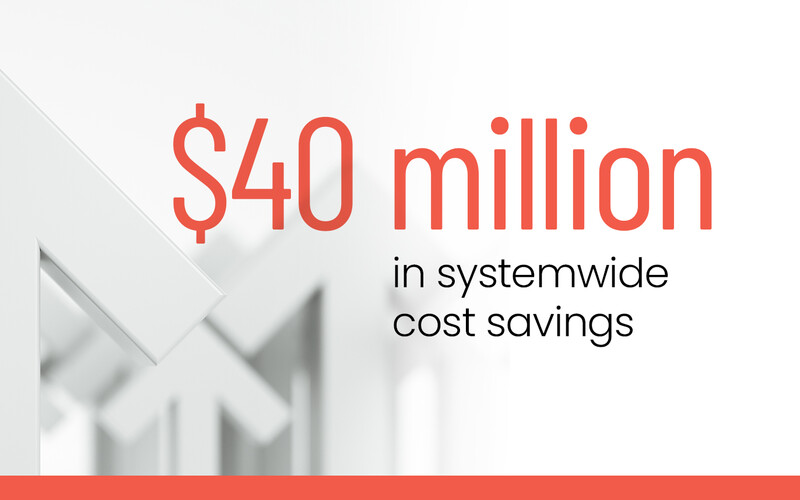
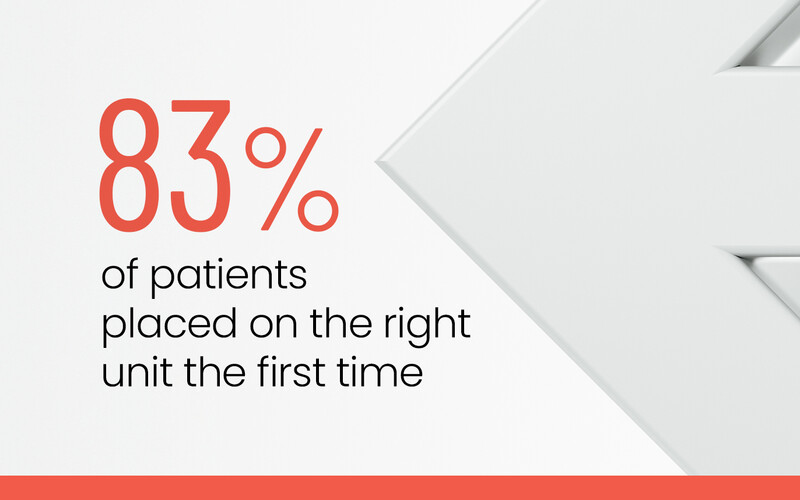
Now, with C3 serving as the health system’s “air traffic control,” many of these challenges related to care coordination are in the rearview. Since the center’s launch, TGH has realized approximately $40 million in overall cost savings, and patient care metrics are among the best in the nation.

“The biggest difference today is that all of our key stakeholders are together in the same room,” Lambert says. “With everyone connected, everything works better, and we’re able to see exactly what each patient needs.”
Ronetta Lambert quote


AdventHealth’s Mission Control Relies On Real-Time Data

It’s not clear how many U.S. hospital systems have established command centers to coordinate patient care, but anecdotal evidence suggests that their numbers are growing.

“I hear from hospitals daily that want to know how we’re doing things and how they can do the same,” says Penny Porteous, executive director at AdventHealth’s Mission Control in Orlando, Fla. “For a lot of them, they’re merging or getting larger, and they’re looking to maintain oversight of their networks as efficiently and positively as they can for patients.”

Similar to TGH down the road, AdventHealth uses real-time data and AI to monitor capacity and optimize patient flow across the 12 hospital campuses and 25 emergency departments that make up its central Florida division. Overall, the organization includes 50 hospitals and hundreds of outpatient sites in Florida and eight other states.

Launched in 2020, AdventHealth’s Mission Control today looks and operates a lot like its namesake at Johnson Space Center, Porteous says.

“It has that NASA command center feel,” she adds, noting that the facility includes more than 60 monitors displaying data on everything from open bed status to ambulance and air medical services locations. The 12,000-square-foot space includes nearly 70 desks and is staffed with nurses, transport technicians, emergency dispatchers and other care coordination specialists.

More than a dozen AI-powered applications run in the background 24/7, and analytics are integrated with the health system’s electronic health record (EHR) to give staff easy access to patient information, including clinical status changes. In an effort to reduce wait times, Mission Control uses clinical AI summaries to determine where in the health system new patients should go.

“It’s not just that a certain patient is the first person we need to place,” Porteous says. “It’s, ‘Which bed is the right bed for them, so the right clinical specialist can provide the right care?’” 

In the past, the answers to such questions typically required a clinician to closely review the patient’s chart and then hunt for an appropriate placement. The process was tedious and inefficient, and needed serious reconfiguring.

“Challenges like that are no longer a major problem,” thanks to Mission Control and the technologies that help the facility run, Porteous says. “We’ll still always need clinicians and human oversight to make sure that we’re making the right decisions, but it’s allowing us to work better as an organization and get care to our patients as quickly as possible.”

Montefiore Einstein Has Better Control Over Care Flows

Ensuring that patients get the care they need where and when they need it is also the goal at Montefiore Einstein in New York City. The Bronx-based academic health system launched its command center in 2024 as an always-open, “one-call solution” for easing patient transfers.

The 5,000-square-foot facility in Westchester, N.Y., is a significant upgrade compared with the small quarters that previously served as the organization’s transfer center, says Command Center Director Brittney Cintron-Owens.

“We used to operate with just four or five phone lines, and we’d write everything down on a piece of paper,” she says. “Now, we have TV screens all over the walls, and we can see all of our patient movement in and out of the hospital and across the entire system.”

The facility is staffed with roughly 35 care coordinators from the command center and patient logistics and admitting departments who work with physicians to match patients with the care locations that best fit their needs. This includes patients who are entering Montefiore Einstein for the first time, and those patients who are already in the system and need to move to higher levels of care.

Click the banner below to sign up for HealthTech’s weekly newsletter.


With the two teams working under the same roof, care coordination comes naturally, notes Command Center Medical Director Dr. Adrienne Wasserman, an emergency medicine specialist. Everyone has access to the same data, and everyone has the same visibility into the availability of the organization’s resources.

“The most important thing is we can communicate in person to operationalize the bed situation throughout our system,” she says.

Because the facility provides a digital connection to Montefiore Einstein’s third-party emergency medical services system, working side by side also allows teams to optimize emergency transfers. “We can see in real time where the ambulances are throughout the region, so we can get them where they need to be to take care of the most critical patients first,” Wasserman adds. 

Looking ahead, the healthcare organization hopes to eventually integrate AI into its EHR to further improve care coordination, Wasserman says, envisioning algorithms for predicting when and where hospital beds will become available.

Still, Cintron-Owens says, they’re more than happy with the way the command center is currently functioning. In its first 12 months, care teams transferred more than double the number of patients they did in 2018, the year the original facility opened.

“We’re doing a lot to improve patient care, but we’re also doing a really good job of keeping patients in our system,” Cintron-Owens says. For a command center, she adds, that’s a win-win. “It’s been a huge success.”

Photography by Octavio Jones