



How to Address Enterprise IT Friction To Improve Workflows
While workers may not be hitting the office printer like they used to, technology-based friction still exists in all industries and departments, despite the massive advancements. Healthcare team members know this evolution all too well, from pagers and floppy disks to smartphones and generative artificial intelligence.
But just because an organization adopts a new technology with powerful capabilities doesn’t mean workflows will automatically improve.
“There is simply no way to remove that friction without being intentional about it. It’s not going to remove itself. It has to be a leader-led effort to design and build friction out of the system,” says Conor Waddell, senior vice president for integrated technology solutions at CDW.
DISCOVER: Research shows how organizations are using new approaches to increase productivity.
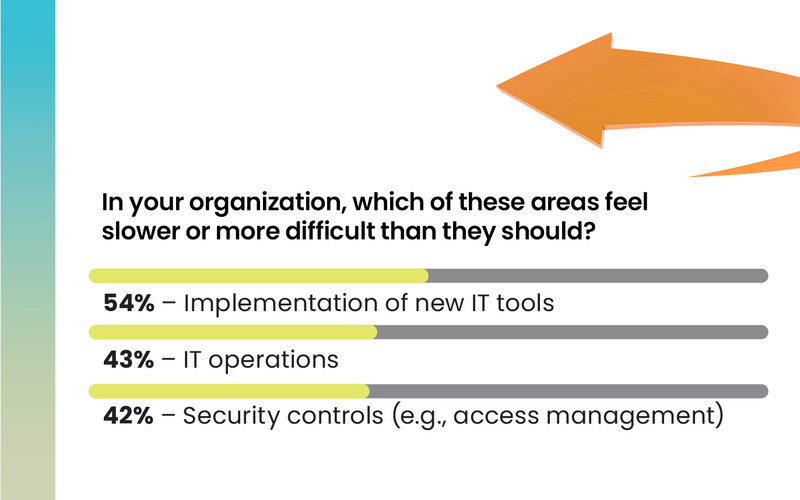
Organizations can’t solve friction solely with new tools; culture, alignment and adoption are equally powerful friction points. When asked to define friction, 51% of respondents to a recent CDW survey described it as process inefficiencies and workflow obstacles, by far the most common response. About 15% said friction manifested in communication and collaboration breakdowns.
“The bottom line: Humans are at the center here,” Waddell says. “But the solution isn’t to blame individuals, it’s to empower them with better tools, clear expectations from leadership and a culture that prioritizes the work of designing this out of the system.”