Clinical decisions can’t wait for batch analytics. Edge computing, real-time data streaming and artificial intelligence (AI) inference at the point of care bring intelligent analysis to the bedside — enabling faster sepsis detection, deterioration alerts and treatment optimization, among many other uses.
“These technologies bring useful insights right where patients are being diagnosed or tested,” says Romina Hipolito, chief nursing informatics officer at Dell Technologies.
While there are many benefits and use cases for edge computing in healthcare, it’s important that organizations understand how to lay the foundation for successful implementation.
DISCOVER: Get expert insights to harness the power of data at the edge.
Clinical Analytics Challenges and the Benefits of Edge Computing
Clinical analytics relies on data. Fortunately, healthcare organizations now generate an abundance of data. The challenge, however, is that all of that data comes from many different sources, such as imaging machines, lab results and electronic health records, and in many different formats.
“So, it’s harder to garner insights because of all of the variability in the data,” Hipolito says.
By contrast, edge computing technologies, such as mobile imaging machines, gather and process data in real time on a bedside device or on-premises server, closer to the data source. Edge computing provides insights at the point of care and supports swift decision-making — all while reducing latency, conserving bandwidth and protecting sensitive patient information.
“Edge computing gives insights to clinicians as quickly as possible so they can make decisions as quickly as possible,” Hipolito says. “Faster insights and access to the data mean faster diagnoses and treatments, helping optimize how we deliver care.”
Speedier care also can help boost patient satisfaction, she adds. “Nobody wants to be in the hospital longer than they need to be.”
And the benefits of faster, more personalized care extend beyond greater convenience and efficiency, Hipolito notes. “In healthcare, having the right insight at the right time and place could mean life and death.”
Click the banner below to find out how to take advantage of data and AI for better healthcare outcomes.
The Expanding Use Cases for Edge Computing in Healthcare
Edge computing today offers numerous use cases in healthcare, and, Hipolito says, “the use cases are only going to grow.”
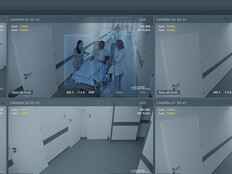
Consider patient safety. Too often, patients at risk for falls get out of their hospital beds and hurt themselves. Especially amid the chronic shortage of healthcare workers, it’s simply not possible to have hospital staff monitor these patients every moment.
But cameras with AI computer vision technology can monitor these patients by analyzing the video feed in their rooms. If a patient starts to climb out of bed, the technology alerts clinicians, who can instruct the individual via an intercom to wait for help. At the same time, the alerted clinicians can notify the closest nurse or technician that the patient needs assistance.
“The technology remotely monitors the patients to provide an extra safety layer, as opposed to having a person there, which is not always a possibility,” Hipolito says.
Another use case involves radiology, where AI-powered tools can lead to earlier diagnoses and treatments. For instance, Northwestern Medicine partnered with Dell Technologies and NVIDIA to develop a generative AI tool that rapidly reviews radiology images and provides radiologists with diagnostic findings and anomalies that typically would require hours of review. The solution boosted radiologist productivity by 40%, without a loss in accuracy.
Surgeons performing endoscopies can use edge AI technology that captures the video feed, makes inferences about potential issues in the patient’s body and alerts the surgeon that specific parts of the body warrant closer inspection. The surgeon doesn’t have to wait to receive the video recording; instead, AI analyzes it in real time.
“AI is analyzing right as the surgeon is performing the procedure, harnessing the power of AI at the bedside,” Hipolito says.
Best Practices for Implementing Edge Computing in Healthcare
Before adopting any edge computing technologies, healthcare organizations first need to have good data governance practices in place, Hipolito cautions. Healthcare organizations have to be “fully invested in data governance,” she says.
“One of the most important things is to start with the data. It has to be governed, and it has to be high quality,” she says. “The technology will only be as trustworthy as the data foundation beneath it.”
Organizations also should consider the workflows that they want the technologies to improve, so that they can identify the right solution for the right problem.
“What problems are you trying to address?” Hipolito asks. “Before you look at the technology, look at the workflows and the outcomes you’re trying to achieve with the data.”
Just as important: When assessing edge computing technologies, healthcare organizations should involve clinicians and any other end users.
“Make sure you have the right stakeholders involved. That’s one of the biggest recipes for success in implementing technology,” Hipolito says.
And, when evaluating vendors, Hipolito recommends selecting validated, healthcare-specific edge computing infrastructure, rather than generic solutions, to help mitigate risks with implementation and integration.